
Oligosaccharides sit at an interesting crossroads: they are carbohydrates, yet they behave more like fibers than like sugar in the body. For anyone paying attention to blood sugar and metabolism, this distinction matters. These short carbohydrate chains are not digested in the small intestine; instead, they travel to the colon, where gut bacteria ferment them. That shift changes how they affect post-meal glucose, insulin and several metabolic signals.
The science is promising but uneven. Some mechanisms are well described, while several health effects remain plausible rather than confirmed. This article explains what oligosaccharides are, how they may influence blood sugar, what current evidence supports (and what it does not), and which everyday foods supply them.
Direct answer: Oligosaccharides are short carbohydrate chains that largely escape digestion and are fermented by gut bacteria. This fermentation produces short-chain fatty acids that may support glycemic regulation and insulin sensitivity, though the strength of these effects varies between individuals and studies.
What Are Oligosaccharides? Definition and Nutritional Classification
Oligosaccharides are carbohydrates made of a small number of simple sugar units linked together, typically between 3 and 10. That makes them longer than table sugar (sucrose, which has only 2 units) but much shorter than starch, which can contain thousands. Because of their specific chemical bonds, most oligosaccharides are not broken down by human digestive enzymes in the small intestine.
This property places them in the broader family of dietary fibers, which international reference texts such as the Codex Alimentarius define as carbohydrates that resist digestion in the small intestine. Within this family, many oligosaccharides also qualify as prebiotics: substrates selectively used by beneficial gut bacteria. Specialized producers such as elicityl-oligotech.com work on well-characterized oligosaccharides used in research and nutrition applications.
FOS, GOS, XOS: what do these abbreviations mean?
Three oligosaccharide families to recognize
- FOS (fructo-oligosaccharides): chains of fructose units, naturally present in onions, garlic, bananas, chicory root and wheat.
- GOS (galacto-oligosaccharides): chains built around galactose, found in small amounts in legumes and some dairy products.
- XOS (xylo-oligosaccharides): chains of xylose units, present in trace amounts in bamboo shoots, fruits and whole grains.
These three families share a common behavior (fermentation in the colon) but differ in their chemical structure, their natural sources and the specific bacteria they feed. A useful comparison: table sugar is absorbed within minutes and raises blood glucose quickly, while oligosaccharides travel almost intact to the gut, where they act more like a slow-release food for microbes than a source of calories for the body.
How Oligosaccharides Influence Blood Sugar Regulation
Oligosaccharides can influence blood sugar through indirect mechanisms, not by acting as sugar themselves. Three pathways are regularly described in the scientific literature, with varying degrees of certainty.
Colonic fermentation and short-chain fatty acids
Once in the colon, oligosaccharides are fermented by gut bacteria into short-chain fatty acids (SCFAs), mainly acetate, propionate and butyrate. These molecules are absorbed through the gut wall and act as signals in several metabolic tissues. A systematic review coordinated by French researchers (Tereos R&D, INRA, INSERM, University of Rennes 1) describes these mechanisms, noting that fructo-oligosaccharide supplementation in rodents reduced fasting blood glucose with effects dependent on dose and diet.
The authors state that “potential underlying mechanisms include gut bacterial fermentation of fructo-oligosaccharides to short-chain fatty acids (SCFA) and bacterial modulation of bile acids.” This is an established mechanism in animal models; its direct transposition to humans remains an area of active research.
Slower carbohydrate absorption and post-meal glucose
Fibers in general, including some oligosaccharides, can slow the absorption of other carbohydrates eaten in the same meal. The practical consequence: a lower and more progressive post-meal glucose peak, rather than a sharp spike. Picture a breakfast of white toast and jam versus the same meal with added legumes or oat fiber; the second combination typically releases glucose into the bloodstream more gradually.
Insulin sensitivity: a plausible but still debated effect
Established vs potential: SCFA production from oligosaccharide fermentation is a well-documented mechanism. Its clinical impact on insulin sensitivity in humans is plausible but has not been consistently demonstrated. In the animal meta-analysis cited above, a reduction in fasting insulin was observed only in rodents fed a low-fat diet.
In other words, the pathway from “eating oligosaccharides” to “measurably better insulin sensitivity” exists on paper, but outcomes vary with the dose, the baseline diet, the duration of intake and the individual’s microbiota.
Oligosaccharides and Metabolic Health: What Current Evidence Shows
Reading the current evidence requires a careful distinction between what is reasonably supported and what remains hypothesis. Both categories exist, and conflating them is one of the main sources of confusion for consumers.
Effects with more consistent support
- Modulation of post-meal glucose response when fibers (including oligosaccharides) are consumed with carbohydrates.
- Production of short-chain fatty acids through colonic fermentation.
- Shifts in gut microbiota composition, favoring certain beneficial species.
- Effects on fasting glucose observed in animal models, dose-dependent.
- Durable improvement in insulin sensitivity in general populations.
- Clinically meaningful reductions in HbA1c attributable to oligosaccharides alone.
- Long-term prevention of type 2 diabetes or metabolic syndrome.
- Equivalent effects across all oligosaccharide types and doses.
Most human trials involve relatively small groups, last a few weeks to a few months, and test different doses and products. This heterogeneity explains why systematic reviews often conclude that effects are “promising but inconsistent.” For a condition like glycemic regulation, that nuance is important.
How to read a label or marketing claim critically

A supplement promising to “regulate blood sugar” is making a strong statement. Health claims on foods and supplements are tightly regulated in many jurisdictions, and marketing language often outruns the available evidence. A useful habit: look at the actual ingredient and dose, then check whether the claim is backed by official authorizations or by independent systematic reviews, rather than by a single study funded by the manufacturer.
Beware of overpromises: any product that guarantees a specific drop in blood sugar or in HbA1c should be viewed with skepticism. Individual responses to oligosaccharides vary considerably, and no food ingredient can replace clinical monitoring for a diagnosed condition.
Which Foods Are Rich in Oligosaccharides?
Many everyday foods naturally contain oligosaccharides, usually in modest amounts that add up over a varied diet. The main dietary sources include:
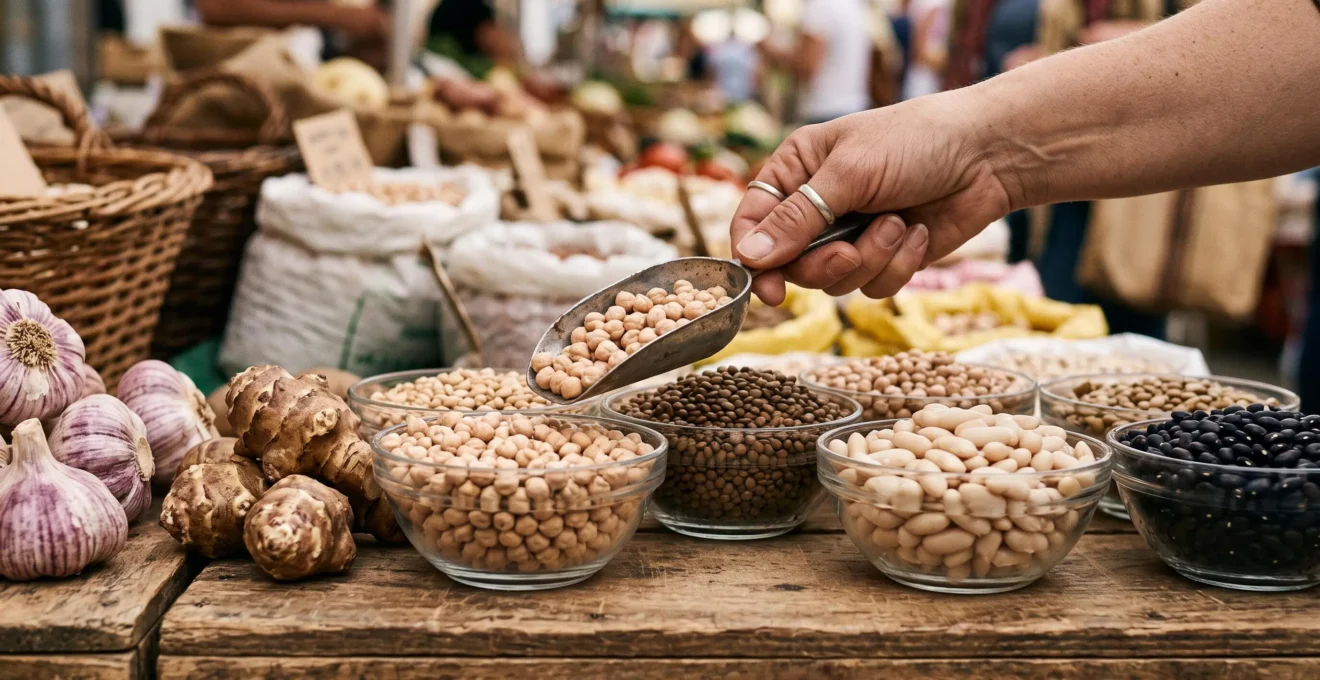
- Legumes: chickpeas, lentils, white and red beans, soybeans (particularly rich in GOS).
- Allium vegetables: onion, garlic, leek, shallot (notable sources of FOS and inulin-type fructans).
- Other vegetables: Jerusalem artichoke, chicory root, asparagus, artichoke.
- Fruits: banana (especially slightly green), watermelon, nectarine.
- Whole grains: wheat, rye, barley.
- Fortified foods: some yogurts, cereals and infant formulas with added FOS, GOS or inulin.
A typical balanced diet in Europe delivers a moderate amount of oligosaccharides as part of total fiber intake. An observational French study conducted by Tereos R&D and the CEN Nutriment Unit in Dijon reported that average dietary fiber intake in Europe is estimated between 16 and 24 g/day, which falls short of most national recommendations. Oligosaccharides are only one slice of this total.
How much is too much? The tolerance question
Oligosaccharides are fermented, and fermentation produces gas. Beyond a certain dose, that gas becomes noticeable: bloating, flatulence, cramps or loose stools. The threshold varies strongly between individuals. The same French study tested short-chain fructo-oligosaccharides at doses up to 40 g/day in healthy volunteers and found them generally better tolerated than longer-chain inulin-type fructans, though individual sensitivity remained a key factor.
- Start small.Add one serving of legumes or a portion of allium vegetables to your usual meals, rather than overhauling the diet overnight.
- Increase over several weeks.The gut microbiota adapts progressively; symptoms often ease after 2 to 4 weeks of regular, moderate intake.
- Drink enough water.Fibers work best when hydration is adequate, which also helps overall digestive comfort.
- Observe your own tolerance.Some people react to FOS or inulin more than to GOS, or vice versa. Noting which foods trigger symptoms helps calibrate intake.
For people watching their blood sugar, meal composition matters more than any single ingredient. Pairing oligosaccharide-rich foods with proteins and healthy fats, as in a bowl of lentils with vegetables and olive oil, usually produces a smoother glycemic response than refined carbohydrates eaten alone. Practical ideas for in-between meals, such as a balanced snack approach, follow the same logic.
A sample day of oligosaccharide-rich meals
- Breakfast: oatmeal with sliced banana and a sprinkle of chopped nuts.
- Lunch: chickpea and vegetable salad with onion, olive oil and whole grain bread.
- Snack: plain yogurt with a few pieces of fresh fruit.
- Dinner: lentil soup with garlic and leek, served with a green salad.
Key Takeaways and Limitations
Oligosaccharides are an interesting bridge between carbohydrates and fibers. Their main action on blood sugar is indirect: they feed gut bacteria, generate short-chain fatty acids and can moderate post-meal glucose response, especially when they come from whole foods eaten as part of a balanced meal.
What to keep in mind about oligosaccharides and blood sugar
- Mechanisms of fermentation and SCFA production are well established, especially in animal studies.
- Clinical effects on insulin sensitivity and long-term metabolic markers in humans remain uneven across studies.
- Natural food sources (legumes, allium vegetables, whole grains) are generally preferable to supplements for most people.
- Individual tolerance varies: introduce fiber-rich foods gradually to limit digestive discomfort.
- Marketing claims often go beyond what evidence actually supports.
Research in this field is active, and conclusions may evolve as larger human trials are published. For anyone managing a diagnosed metabolic condition, dietary changes are useful but complementary to medical follow-up.
If you want to go further into the science of these molecules, dedicated producers and researchers such as those working on characterized oligosaccharide fractions publish technical resources that complement nutritional literature.
Do oligosaccharides lower blood sugar directly?
Not directly. They are not absorbed as glucose. Their potential effect on blood sugar comes from slowing the absorption of other carbohydrates in a meal and from fermentation products (short-chain fatty acids) that may influence glucose metabolism over time. Measurable effects vary between individuals and remain modest in most human studies.
What is the difference between FOS, GOS and XOS?
FOS (fructo-oligosaccharides) are chains of fructose units found in onions, garlic and chicory root. GOS (galacto-oligosaccharides) are built around galactose and occur in legumes and some dairy products. XOS (xylo-oligosaccharides) are chains of xylose present in trace amounts in whole grains and certain plants. All three are fermented in the colon but feed slightly different bacterial populations.
Can oligosaccharides cause digestive discomfort?
Yes, especially at higher intakes or when introduced suddenly. Fermentation produces gas, which can cause bloating or cramps. Short-chain FOS tend to be better tolerated than longer-chain inulin-type fructans, but personal sensitivity varies. A gradual increase and adequate hydration usually help the gut adapt.
Are oligosaccharide supplements better than fiber-rich foods?
For most people, whole foods are a preferable starting point. They supply oligosaccharides alongside other fibers, vitamins, minerals and plant compounds that work together. Supplements may have a role in specific situations, but their benefits on blood sugar depend on dose, product type and individual response. A healthcare professional can help decide if they are appropriate.
Important notice: This article provides general nutritional information and does not replace personalized medical advice. People with diabetes, pre-diabetes or any other metabolic condition should discuss dietary changes with a doctor or registered dietitian before significantly modifying their intake of fibers, prebiotics or supplements.